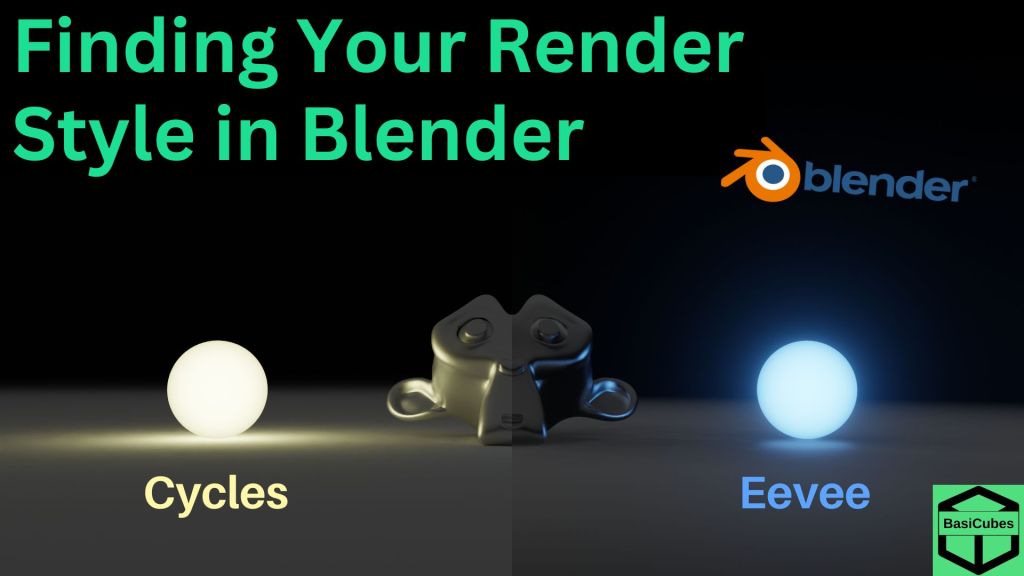
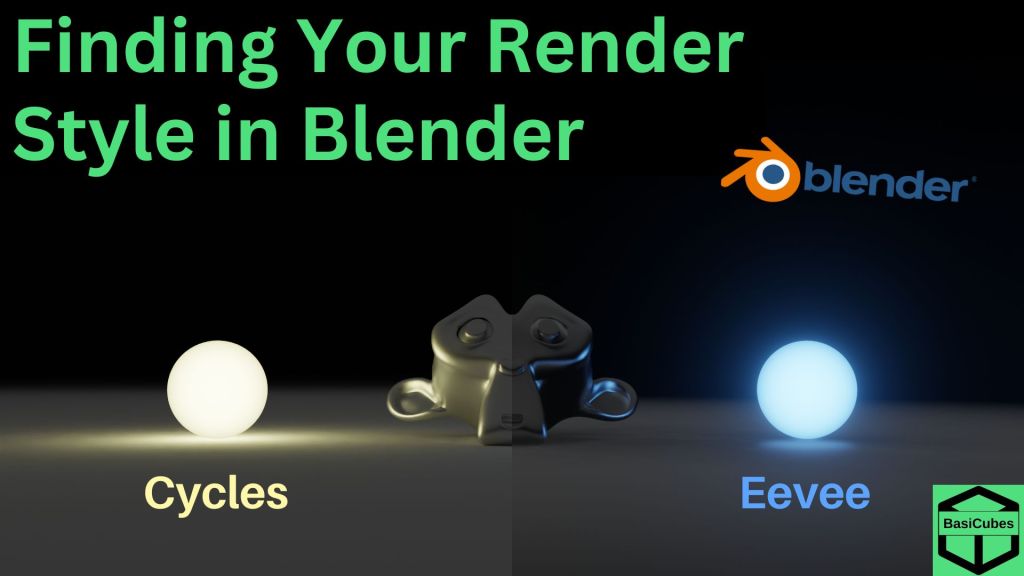
What is the Difference between Eevee and Cycles
Blender is a popular open-source software used for creating stunning 3D animations, models, and renders. Renders are made through the process of turning a 3D scene into a 2D image. Blender includes three render engines, each with their different strengths and weaknesses. Today, we will only focus on Eevee and Cycles, two rendering engines with distinct features that fit to different needs. Eevee is a real-time renderer, while Cycles is a path tracer renderer.
The question of which engine to use comes up. In this blog, we will explore the purpose, strengths, and weaknesses of each rendering engine to help you to make your decision.
What is Eevee
Eevee differs from raytracing render engines in that it uses a process called rasterization instead of computing each ray of light. Rasterization estimates how light interacts with objects and materials using numerous algorithms, making it significantly faster than raytracing, but less precise. Although Eevee incorporates PBR principles, it’s not flawless, and Cycles will always produce more accurate renders. This is because Eevee prioritizes speed, interactivity, and real-time rendering. Eevee is also designed to be used interactively in the 3D viewport, enabling users to see changes to their scene immediately. As a result, it’s an excellent choice for quickly iterating and previewing work.
Eevee’s Advantages
Eevee excels in its ability to seamlessly preview materials in real-time, making it one of its main advantages. Its rendering speed is faster than other engines like Cycles, making it a highly efficient option. Eevee’s ability to utilize the GPU of the graphics card in a computer makes it faster and less resource-intensive on the system’s CPU. Furthermore, its intuitive interface is designed to be user-friendly, making it an excellent choice for beginners.
Eevee’s Limitations
However, Eevee does have its limitations. Unlike Cycles, it is not a raytrace render engine, so its accuracy is not as high. Additionally, Eevee has limited support for certain features, such as volumetrics, hair rendering, and certain types of lighting. Another drawback is the limited control over the render process, which may not appeal to users who want more fine-tuned control. Finally, Eevee requires a powerful graphics card to render efficiently, which may be a challenge for those with less powerful hardware.
What is Cycles
Cycles is Blender’s path tracer that aims to produce photorealistic images while allowing for artistic control and flexible shading nodes. It uses physically-based rendering techniques, which allow it to accurately simulate the behavior of light and materials in the real world. This means that the results produced by Cycles are highly realistic. Additionally, Cycles allows for a high level of control over the render process, enabling users to fine tune settings such as the number of light bounces, sampling rates, and denoising options.
Cycles‘s Advantages
One of the key advantages of Cycles is its ability to produce highly realistic images with precise lighting and materials. This includes accurate representations of real-world materials, such as, metal, glass, and plastic. Cycles boasts a vast library of pre-built materials and shaders, which can be leveraged to achieve a diverse range of effects.
Furthermore, Cycles’ flexibility and customizability make it an excellent choice for users who desire more control over the rendering process. Unlike Eevee, it supports volumetrics, hair rendering, and advanced lighting options like HDRI maps. Additionally, Cycles produces higher-quality output than Eevee, making it a great choice for high-quality images for film, architecture, and product visualization.
Cycles’s Limitations
However, Cycles does have its limitations. It is a very complex render engine that takes a long time to render and is resource-intensive. It requires a lot of processing power and memory, which can be a disadvantage for those with less powerful computers. Cycles also has a steep learning curve, requiring a good understanding of lighting and materials to use effectively. Finally, it has limited support for real-time rendering and is not as good at creating stylized or cartoon-like images as some other engines.
Conclusion
In conclusion, both Eevee and Cycles offer unique features that meet different needs. Eevee is best for those who need quick iterations and previewing work, while Cycles is best for those who need high-quality output and complete control over the rendering process. However, both engines have their limitations and should be considered based on the user’s specific needs.
 BasiCubes
Leave a comment